
Portugal Travel Tips: 23 Things to Know Before You Go
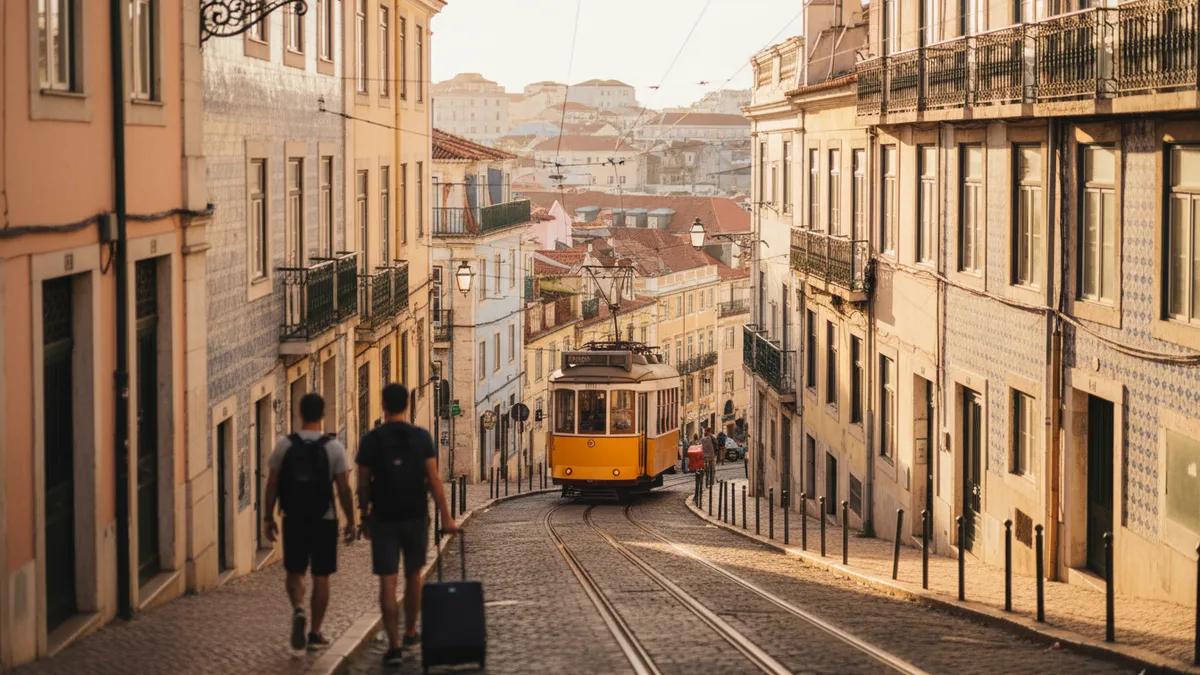
Portugal rewards a little planning. It is friendly, safe, and easy to get around, but a handful of local habits (late dinners, counter-versus-table pricing, which ATMs to avoid) can trip up first-timers. Here are 23 things worth knowing before you land, gathered from living and traveling here rather than from a brochure.
Money and cards
1. Multibanco is king. Portugal's homegrown bank network, Multibanco (the blue "MB" signs), runs the cash machines locals use. They are everywhere, reliable, and charge fair fees.
2. Avoid the standalone Euronet ATMs. The bright yellow-and-blue Euronet machines clustered around tourist spots push poor exchange rates and add-on charges. Use a real bank ATM or a Multibanco machine instead, and always choose "without conversion" (decline the machine's own rate) so your bank does the conversion.
3. Cards are accepted almost everywhere, including contactless. Still, carry some cash for small cafes, markets, tips, and rural spots.
4. MB Way is the local phone-based payment and transfer app. You generally will not need it as a visitor, but do not be surprised when a Portuguese friend or small vendor asks to split a bill that way.
5. Portugal is good value by Western European standards. Coffee is roughly 0.70 to 1 euro, a pastel de nata around 1.10 to 1.50 euros, and a modest lunch with a glass of wine often 12 to 18 euros. For a fuller cost breakdown, see is Portugal expensive and our money in Portugal guide.
Language and people
6. English is widely spoken in Lisbon, Porto, the Algarve, and tourist areas, especially among younger people and in hospitality. Learn a few words anyway: "bom dia" (good morning), "obrigado" if you are male or "obrigada" if you are female (thank you), "se faz favor" (please). Effort is noticed and appreciated. More detail in do they speak English in Portugal.
7. Portuguese is not Spanish. Locals are warm about it, but do not assume the two are interchangeable. A quick "desculpe, fala ingles?" (sorry, do you speak English?) is the polite opener.
Getting around
8. Trains and buses are cheap and comfortable. Comboios de Portugal (CP) links Lisbon, Porto, Coimbra, and the Algarve; long-distance buses (Rede Expressos, FlixBus) reach smaller towns. Book intercity trains a few days ahead for the best fares.
9. Cities are walkable but hilly. Lisbon and Porto are built on steep hills. Pack proper shoes, and use the trams, funiculars, and metro to spare your legs.
10. Renting a car makes sense for regions, not cities. The Algarve, Alentejo, and the Douro Valley open up with a car, while central Lisbon and Porto are a parking headache. Read our honest take in renting a car in Portugal, and for the bigger picture see getting around Portugal.
11. Tolls can be sneaky. Some motorways use electronic-only tolls (the green "Via Verde" lanes). If you rent a car, ask the agency how tolls are handled so you do not get a surprise bill later.
Food, coffee, and meal times
12. Dinner is late. Portuguese restaurants often do not get busy until 8pm or later, and many kitchens open for dinner around 7pm. Lunch runs roughly noon to 3pm. Show up at 6pm and you may find the place empty or still closed.
13. A "bica" is an espresso, not a beer. Order a bica in Lisbon (or a "cimbalino" in Porto) and you get a small strong espresso. If you want something longer, ask for an "abatanado" (closer to an Americano) or a "meia de leite" (like a latte). A beer, for the record, is "uma imperial" (a small draft) or "uma caneca" (a larger one).
14. Standing at the counter is cheaper. The same coffee and pastry cost more at a table with service than at the balcao (counter). It is not a scam, just how cafes price. Counter service is also faster.
15. The couvert is optional. The bread, olives, and cheese that appear before you order are not free. If you do not want them, wave them away and you will not be charged.
16. Try beyond the pastel de nata. Yes, eat the custard tarts (Manteigaria and Pasteis de Belem are the famous ones). But also seek out grilled sardines in summer, bacalhau (salt cod) in countless forms, and a bifana (pork sandwich) with a beer.
Tipping, safety, and everyday life
17. Tipping is modest and not mandatory. Service is not calculated into a tip culture the way it is in the US. Rounding up or leaving 5 to 10 percent for good restaurant service is generous and appreciated, not expected. In cafes, leaving the small coins is plenty.
18. Portugal is very safe. Violent crime is rare and it consistently ranks among the safest countries in Europe. The main risk is opportunistic pickpocketing.
19. Watch your pockets on Lisbon's tram 28 and in crowded metro cars, at Porto's Sao Bento, and in busy plazas. Keep bags zipped and in front of you. Nothing to be paranoid about, just normal city sense.
20. Tap water is drinkable across the mainland, Madeira, and the Azores. Bring a refillable bottle; you will save money and cut plastic.
Practical bits
21. Plugs are Type F, 230 volts. Portugal uses the round two-pin europlug at 230V/50Hz. UK, US, Australian, and most non-EU visitors need a simple travel adapter, and US devices need to be dual-voltage or run through a converter. Full details in plugs and adapters for Portugal.
22. When to come. Late spring (May to June) and early autumn (September to October) hit the sweet spot of warm weather and thinner crowds. July and August are hot and busy, especially in the Algarve; winter is mild, green, and cheap. Our best time to visit Portugal guide breaks it down by region, and if you are planning around a festival, check the Portugal events calendar and the events for 2026 and 2027.
23. Entry and the ETIAS question. Most visitors from the US, UK, Canada, Australia, and the EU do not need a visa for short stays. The EU's new ETIAS travel authorisation (a roughly 20 euro online pre-registration for visa-exempt travelers) has been announced with a phased rollout, but the start date has shifted several times. Rather than trust any fixed date, check the official europa.eu/etias site a few weeks before you travel. Keep your passport valid for the length of your stay with a little margin.
Staying connected without the roaming shock
One item that quietly makes or breaks a trip is data. Google Maps for the tram, a table booking, a boarding pass, splitting a bill: all of it wants a connection. Non-EU visitors especially get stung by roaming charges in Portugal, so it is worth sorting before you arrive.
You have a few honest options. An eSIM for Portugal installs on a modern phone in minutes with no physical swap. A local data SIM card suits older or unlocked phones, and you can grab one right at Lisbon airport. A rented pocket WiFi hotspot connects a whole family or group on one device, which is often the cheapest per person. If you are weighing them up, our eSIM vs pocket WiFi vs SIM comparison and how much data do I need explainer help you pick.
One honest caveat: no network covers every square metre. Portugal Internet runs on NOS and Vodafone, two of the country's leading networks, and coverage is excellent in cities and along the coast. But signal genuinely drops in the deep rural Alentejo, up in the Peneda-Geres mountains, along Madeira's levada trails, and near the Nazare cliffs. For those days, download offline maps in advance. If a road trip is your plan, Portugal road trip internet covers the gaps, and there is a fuller overview in internet in Portugal.
Land connected, skip the roaming bill
Pocket WiFi and eSIMs for Portugal on NOS and Vodafone, ready before you arrive.
Traveling beyond the two big cities? We have local connectivity notes for Lisbon, Porto, the Algarve, Madeira, and the Azores.
Frequently asked questions
Is Portugal expensive to visit in 2026?
Portugal is one of Western Europe's better-value destinations. A coffee runs about 0.70 to 1 euro, a pastel de nata around 1.10 to 1.50 euros, and a simple sit-down lunch with wine often lands near 12 to 18 euros per person. Lisbon and the Algarve in summer cost noticeably more than Porto or the interior.
Do people in Portugal speak English?
Yes, English is widely spoken in Lisbon, Porto, the Algarve and most tourist areas, especially by younger people and anyone in hospitality. In rural villages it is less common, so a few Portuguese words like obrigado for thank you go a long way.
What power plug does Portugal use?
Portugal uses the Type F plug (the round two-pin europlug) at 230 volts and 50 hertz. Visitors from the UK, US, and most non-EU countries need a simple travel adapter. US devices also need dual-voltage support or a converter.
Is the tap water safe to drink in Portugal?
Yes, tap water across mainland Portugal, Madeira and the Azores is safe to drink and meets EU standards. It can taste slightly different from home in some coastal areas, but it is perfectly fine. A refillable bottle saves money and plastic.
Do I need a visa or travel authorisation for Portugal in 2026?
Most visitors from the US, UK, Canada, Australia and the EU do not need a visa for short stays. The EU's new ETIAS travel authorisation is expected to launch during a phased rollout, but the exact date has shifted several times, so check the official europa.eu/etias site close to your trip rather than relying on any fixed date.