
Renting a Car in Portugal: Tolls, Via Verde & Tips
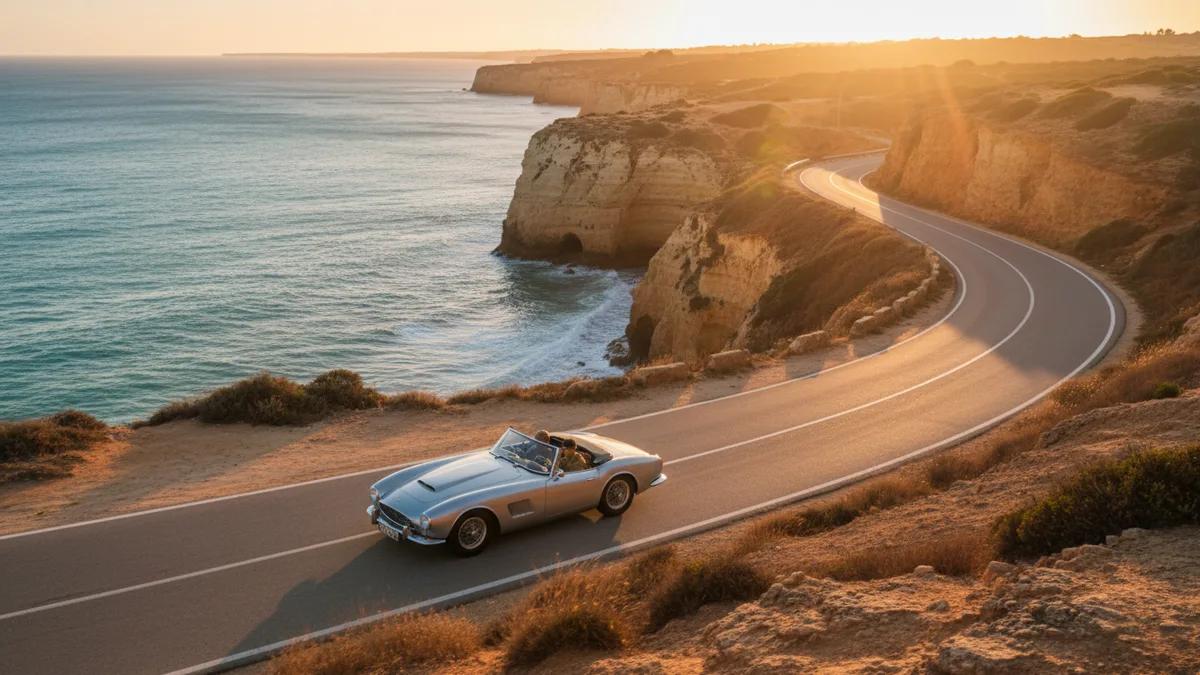
A road trip is one of the best ways to see Portugal. The country is small enough to cross in a few hours, yet packed with backroads that reward you: cork-oak plains in the Alentejo, terraced vineyards above the Douro, and cliff-top corners in the Algarve that no bus will ever take you to. But renting a car here comes with a few local quirks that catch visitors out, and the electronic tolls are the biggest source of confusion. Here is what you actually need to know for 2026.
Do you even need a car?
Let us be honest, because a lot of guides will not be. If your trip is a Lisbon or Porto city break, you almost certainly do not need a car, and a car will make your trip worse. Both cities have metros, trams, buses and walkable historic centres, parking is expensive and scarce, and the streets are narrow, steep and one-way. The train between Lisbon and Porto takes under three hours and is comfortable and cheap. Renting a car for a city-only trip means paying for something to sit in a garage.
You do want a car when:
- You are exploring the Alentejo, the Douro valley or the interior, where public transport is sparse and the villages, vineyards and viewpoints are the whole reason you came.
- You want to roam the Algarve freely, hopping between beaches and towns on your own schedule rather than resort shuttles.
- You are chaining together small towns and want the freedom to stop for a viewpoint, a lunch or a detour on a whim.
For a deeper look at the trade-offs between driving, trains and buses, see our guide to getting around Portugal.
Booking tips that save money
Automatic vs manual. Manual (stick shift) is the default across Europe, and Portugal is no exception. Automatics exist but are fewer and cost more, and in summer the limited automatic stock is the first thing to sell out. If you need an automatic, book it early rather than hoping to sort it at the counter.
Watch the fees. Rental headline prices are rarely the whole story. Look out for:
- Young-driver and senior surcharges, which typically apply under 25 and sometimes over 70.
- Cross-border fees if you plan to drive into Spain. Tell the company in advance, as some restrict it or charge extra.
- Fuel policy. Insist on full-to-full: you get the car full and return it full. Avoid "full-to-empty" deals, where you prepay a tank at a marked-up rate and effectively donate any fuel you do not use.
- Excess and insurance. The basic rate usually leaves a high damage excess. The counter will push expensive top-up cover; a standalone car hire excess policy bought before your trip is often far cheaper for the same protection.
Electronic tolls: the part everyone gets wrong
This is the single most confusing thing about driving in Portugal, so read it carefully.
Portugal has two kinds of tolls. Some motorways still have traditional toll booths, where you take a ticket or pay as you pass with cash, card or a transponder. Others are fully electronic, with no booths at all. On these roads, overhead gantries simply photograph your number plate as you drive under them at full speed, and you are billed afterwards. There is nowhere to stop and pay, which is exactly why unwary visitors rack up unpaid tolls and, later, fines.
Good news for 2026: as of 1 January 2025, Portugal scrapped tolls on the former SCUT motorways. That includes the A22 across the whole Algarve, plus the A23, A24, A25, A28, the A4 Marao tunnel and the A13. Those roads are now free. So the Algarve, once the classic electronic-toll trap, is much simpler than it used to be. However, the main network still charges tolls, including the A1 (Lisbon to Porto) and the A2 (Lisbon towards the Algarve), and several fully electronic sections remain elsewhere.
The simplest solution for a rental car: since 2023, rental companies in Portugal are required to fit their cars with an electronic toll device (a transponder). Take it. Whether it is the country's own Via Verde system or the rental company's own device, it reads every gantry and every booth automatically, and the tolls land on your final rental bill. You never have to think about it. There is usually a small daily service fee, but it is worth it to avoid the alternative: a missed electronic toll quietly becoming a penalty weeks after you fly home.
If you are driving your own foreign-plated car into Portugal rather than renting, you have other options designed for visitors:
- Via Verde Visitors, a rental transponder for foreign vehicles that bills a linked card automatically.
- Easytoll, a kiosk at the first border crossing or airport that links your bank card to your number plate for 30 days.
- Tollcard, a prepaid card, and short-term virtual toll passes for a few days of travel.
For most people reading this, though, the rule is simple: rent the car, accept the toll device, and stop worrying about it.
Driving rules to know
Portugal is straightforward to drive in once you know the basics:
- Drive on the right, overtake on the left.
- Licences: EU and EEA licences are fine as they are. Most visitors on UK, US, Canadian, Australian and other common licences can drive on their home licence for a tourist stay, though an International Driving Permit is a cheap, sensible backup and some rental desks ask for one. Check your own country's status before you travel.
- Speed limits are roughly 50 km/h in towns (with 30 and 20 zones in some areas), 90 to 100 km/h on open roads and expressways, and 120 km/h on motorways unless signed otherwise.
- Drink-driving is strict. The limit is 0.5 g/l, and only 0.2 for drivers with under three years' experience. Just do not drink and drive.
- Seatbelts are compulsory for everyone, and children under 12 (or under 135 cm) must use an appropriate restraint and sit in the back.
- Phones must be hands-free only.
- Roundabouts are everywhere, and traffic already on the roundabout has priority. Signal as you leave.
- Keep your headlights and documents in order, and carry a reflective vest and warning triangle, which rentals usually supply.
Parking, fuel and city centres
Parking. In cities, look for blue-lined "zona azul" bays, which are paid and time-limited. You can often pay by app rather than fumbling for coins: Telpark works in many cities, and Lisbon's on-street parking runs through the council EMEL system (the ePark app). White-lined spaces are usually free but rare in centres. Garages are the stress-free option in Lisbon and Porto.
Fuel. Stations sell gasoleo (diesel) and gasolina (petrol, in 95 and 98). Double-check which your rental takes, as diesel is common here. Fuel is not cheap by regional standards, so factor it in, and note that motorway service stations tend to be pricier than a supermarket or town station just off the road.
City centre restrictions. Historic centres in Lisbon, Porto and other towns have restricted-access zones (ZTL) with camera enforcement, plus tram tracks, pedestrian streets and impossibly tight lanes. This is another reason a car is a liability for a city stay. Park on the edge and walk or take the tram.
For a wider sense of trip costs, our guide on whether Portugal is expensive is a useful companion, and if you are still choosing dates, see the best time to visit Portugal for how weather and crowds change the driving experience.
Staying connected on the road
Here is the practical truth of a Portuguese road trip: it lives on your phone. Navigation, the toll and parking apps, real-time weather for that coastal drive, restaurant bookings, and finding the next charger or fuel stop all need data. And Portugal, for all its charm, has genuine mobile dead zones: the rural Alentejo, the mountain roads of the Serra da Estrela, the inland Algarve, and the far north around Peneda-Geres. Your map can freeze at exactly the fork where you needed it.
Two things fix this. First, download offline maps before you set off, so navigation keeps working with no signal. Second, carry a reliable connection for the whole car, not just one phone on patchy roaming. A pocket WiFi hotspot keeps every device online at once, which matters when a car full of people is sharing navigation, playlists and photos, and it means phones stay charged from the car rather than draining as personal hotspots. Portugal Internet's hotspots run on the NOS and Vodafone networks for the widest realistic coverage, and you can have one waiting for you on arrival. See our dedicated Portugal road trip internet guide, or just rent a WiFi hotspot for the trip. If the vehicle is a campervan or motorhome rather than a hire car, the vanlife version of this guide covers 12V power, battery life and month-long rentals.
If you would rather keep it on your phone, an eSIM for Portugal or a local data SIM card both work well for a single traveller. Not sure which suits you? Our eSIM vs pocket WiFi vs SIM comparison lays out the trade-offs.
Keep the whole car online, right across Portugal
Rent one pocket WiFi hotspot for your road trip - unlimited data on NOS and Vodafone, so GPS never drops out in the Alentejo or the Serra da Estrela. Waiting for you on arrival.
Frequently asked questions
Do I need a rental car in Portugal?
Not for a Lisbon or Porto city break. Both cities have excellent metro, trams, buses and walkable centres, plus fast trains between them, so a car is more of a parking headache than a help. You want a car for the Alentejo, the Douro valley, the interior, and for exploring the Algarve beyond the main resorts, where public transport is thin and the freedom to stop where you like is the whole point.
How do electronic tolls work for rental cars in Portugal?
Some Portuguese motorways have traditional toll booths, but others are fully electronic with no booths at all, where overhead gantries photograph your number plate and bill you later. Rental cars in Portugal are legally required to carry an electronic toll device (a transponder), so the simplest option is to accept the rental company's toll device at pickup. It reads every gantry and booth automatically and the charges appear on your final bill. Without a device on an electronic-only road, an unpaid toll can turn into a fine.
Did Portugal really abolish tolls on some motorways?
Yes. From 1 January 2025, tolls were removed from the former SCUT motorways, including the A22 across the Algarve, the A23, A24, A25, A28, the A4 Marao tunnel and the A13. Those roads are now free. Most of the main network, such as the A1 Lisbon to Porto and the A2 towards the Algarve, still charges tolls.
Is manual or automatic more common in Portuguese rental cars?
Manual (stick shift) is the default in Portugal and across Europe, and automatics are fewer and pricier. If you cannot or would rather not drive a manual, book an automatic as early as you can, because the limited automatic stock sells out first in summer.
What is the drink-driving limit in Portugal?
The blood alcohol limit is 0.5 grams per litre, lower than in some countries, and just 0.2 for drivers who have held a licence for under three years. Penalties are steep, so the safe approach is not to drink at all if you are driving.