
Money in Portugal: Cards, Cash, ATMs & MB Way
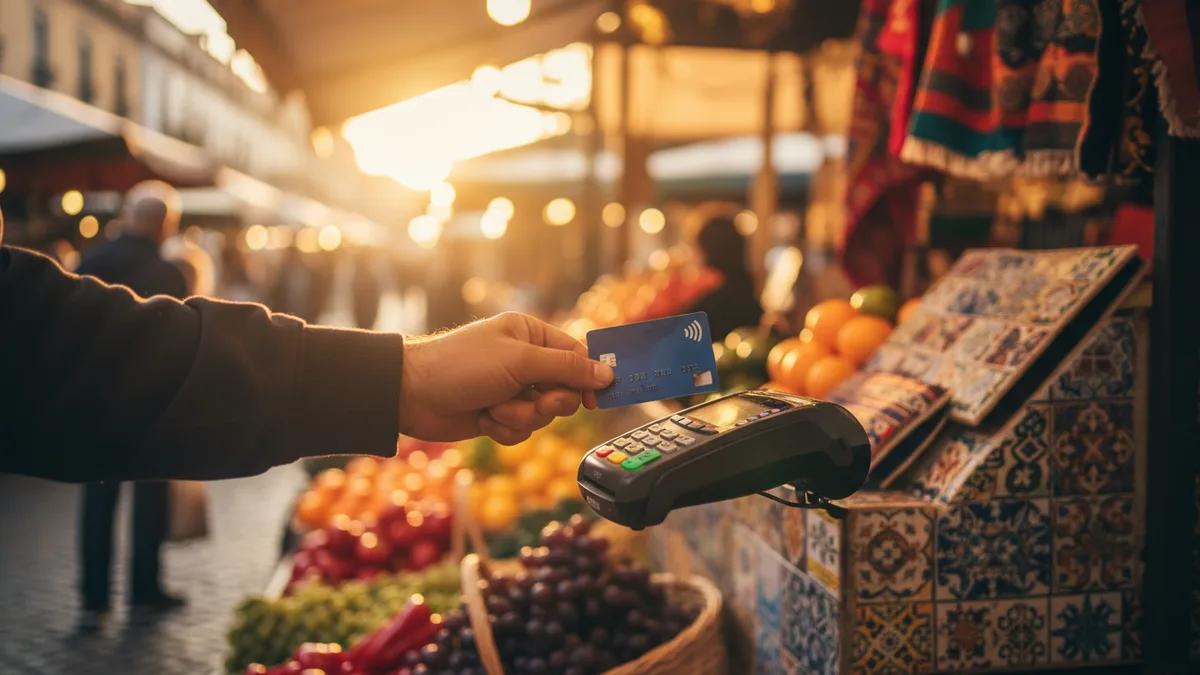
Portugal is one of the easiest countries in Europe to pay your way around, but a few local quirks can quietly cost you money if you do not know them. This guide covers the currency, when to reach for a card versus cash, how to use ATMs without getting stung by fees, and where mobile payment apps like MB Way, Apple Pay and Revolut fit in. It is written for travelers planning a trip in 2026.
The currency: the euro
Portugal uses the euro (EUR), shown as the symbol before or after the amount depending on context. Banknotes come in 5, 10, 20, 50, 100, 200 and 500 euro values, though anything above 50 is rarely handed out and some small shops will not accept a 100 or 200 note. Coins run from 1 and 2 cents up to 1 and 2 euro coins.
One habit worth building from day one: prices are always displayed in euros, so pay in euros. If a card terminal or ATM ever offers to charge you in pounds, dollars or your home currency, that is dynamic currency conversion (DCC) and it almost always costs you more. More on that below.
Cards vs cash: what to carry
Card acceptance in Portugal is excellent. In Lisbon, Porto, the Algarve and most towns you can tap a card or phone for almost everything, including small purchases like a coffee or a pastel de nata. Contactless is the norm and Visa and Mastercard are accepted virtually everywhere.
That said, cash still matters. Keep some euros on hand for:
- Small family-run tascas and neighbourhood cafes, some of which only take cash.
- Local markets, roadside fruit stalls and craft sellers.
- Rural areas and smaller villages, where card coverage thins out.
- Tips, which are easier and more appreciated in cash.
- Places with a card minimum, often around 5 euros, common in small bakeries and bars.
A practical rule is to carry roughly 30 to 50 euros per person per day as a backup and top up from an ATM as you go, rather than exchanging a large sum at the airport where rates are poor.
If you want the full picture on day-to-day costs before you go, our guide on whether Portugal is expensive breaks down real prices for food, transport and activities.
ATMs: use Multibanco, avoid Euronet
Portugal's national ATM network is called Multibanco, usually shown as MB. It is one of the best-run cash networks in Europe, and withdrawals from bank-branded Multibanco machines are typically fee-free on the Portuguese side (your own bank may still charge its own foreign-withdrawal fee, so check that before you travel).
Here is the trap. In tourist areas you will also see standalone ATMs in blue and yellow branding, most of them operated by Euronet. These machines charge high withdrawal fees and aggressively push DCC, offering to convert your withdrawal to your home currency at a bad exchange rate. Reports from travelers put the effective surcharge in the region of 10 percent or more once fees and the poor rate are combined.
Two simple rules protect you:
- If the machine does not clearly say Multibanco, walk on and find a bank ATM instead. Bank-branded Multibanco machines sit outside branches of banks like Caixa Geral de Depositos, Millennium BCP, Santander and others.
- When any ATM asks whether you want to be charged in euros or your home currency, always choose without conversion and pay in euros. The screen may ask twice. Decline both times.
Follow those two and you keep your bank's own fair exchange rate, which is usually within about 1 percent of the real mid-market rate.
Multibanco does more than dispense cash
Multibanco machines are woven into daily life in Portugal. Beyond withdrawing cash you can pay utility bills, buy tickets for events and transport, and top up a prepaid phone, all from the same screen. As a visitor you probably will not need these, but if a hotel or service gives you a Multibanco reference (an entity number and a reference code) to pay, any MB machine will handle it.
MB Way and mobile payments
MB Way is Portugal's dominant mobile payment app. Locals use it constantly to split bills, send money between friends and pay online with just a phone number and a PIN. If you spend time here you will hear it mentioned everywhere.
The honest catch for visitors: MB Way is tied to a Portuguese bank account, so most tourists cannot set it up for a short trip. Do not plan around it. Instead, the mobile options that work smoothly for travelers are:
- Apple Pay and Google Pay, accepted at essentially any contactless terminal.
- App-based travel cards like Revolut and Wise, which give near-market exchange rates and let you spend in euros without hidden markups.
Set up Apple Pay or Google Pay with your card before you fly, and consider a Revolut or Wise card as a low-fee backup. Between them you will rarely need to touch cash except in the situations listed earlier.
One connectivity note that trips people up: mobile payment and banking apps only work when your phone is online. Confirming an Apple Pay purchase, approving a Revolut top-up, or reacting to a fraud alert SMS from your bank all need a live data connection. Relying on patchy cafe WiFi is a recipe for a declined payment at the worst moment. A local eSIM keeps your banking and payment apps working the whole trip without switching on expensive roaming. If your phone supports it, an eSIM for Portugal is the simplest option; if you would rather keep every device online at once, a pocket WiFi rental or a local data SIM card do the same job. Our guide to avoiding roaming charges in Portugal explains why this matters even for EU travelers.
Avoiding DCC on card terminals too
The dynamic currency conversion trap is not limited to ATMs. When you pay by card in a shop or restaurant, the terminal may ask whether to charge in euros or your home currency. The answer is always euros. Choosing your home currency lets the terminal apply its own inflated exchange rate, and you lose money on every transaction. Paying in euros lets your own card issuer do the conversion at a far better rate.
Tipping in Portugal
Tipping in Portugal is modest and never obligatory. Service is not built around tips the way it is in some countries, and staff are paid a regular wage.
- In restaurants, rounding up or leaving around 5 to 10 percent for good service is normal and appreciated.
- For a coffee, a quick drink or a snack at a counter, there is no expectation to tip.
- Cash tips are preferred, because they go directly to the staff rather than through a card system.
- Taxi fares are commonly rounded up to the nearest euro rather than tipped by percentage.
If a bill already includes a service charge, an extra tip is entirely optional.
Fraud and safety basics
A few small precautions keep your trip smooth:
- Tell your bank you are travelling to Portugal so a foreign transaction does not get flagged and frozen.
- Carry a backup card, stored separately from your main one, in case a card is lost, blocked or swallowed by a machine.
- Use contactless where you can. Portugal's contactless limit is commonly 50 euros per tap before a PIN is required, which keeps your card in your own hands.
- Keep your bank's app installed and logged in so you can freeze a card instantly if something looks wrong. This is another reason to stay connected while you travel.
For more on planning the practical side of your trip, see our broader Portugal travel tips and advice on the best time to visit Portugal.
Frequently asked questions
What currency does Portugal use?
Portugal uses the euro (EUR). Notes come in 5, 10, 20, 50, 100, 200 and 500 euro values, and coins run from 1 cent up to 2 euros. Prices are always shown in euros, so pay in euros and never accept a card terminal offer to charge you in your home currency.
Should I use cards or cash in Portugal?
Cards and contactless are accepted almost everywhere in cities, including for small amounts. Still carry some cash for small family-run tascas, markets, rural cafes, tips and the occasional place with a card minimum. A rough guide is 30 to 50 euros per person per day in cash as a backup.
How do I avoid high ATM fees in Portugal?
Use bank-branded Multibanco (MB) ATMs, which are usually fee-free. Avoid the standalone blue and yellow Euronet machines in tourist areas, which charge high fees and push bad exchange rates. Whenever a screen offers to convert to your home currency, choose without conversion and pay in euros.
Can tourists use MB Way in Portugal?
Usually not fully. MB Way is Portugal's dominant mobile payment app but it needs a Portuguese bank account to set up, so most visitors cannot use it. Tourists rely on Apple Pay, Google Pay or app-based cards like Revolut and Wise instead, all of which work at contactless terminals.
Do you tip in Portugal?
Tipping is modest and never obligatory. Rounding up or leaving about 5 to 10 percent for good restaurant service is normal. Cash tips are preferred because they go straight to the staff. There is no expectation to tip for a coffee or a quick drink at the counter.
Keep your banking and payment apps online in Portugal
Rent a pocket WiFi or grab a local eSIM so Apple Pay, Revolut and your bank's fraud alerts work everywhere you go, without roaming fees.