
Phones That Don't Support eSIM (and the 2026 Alternative)
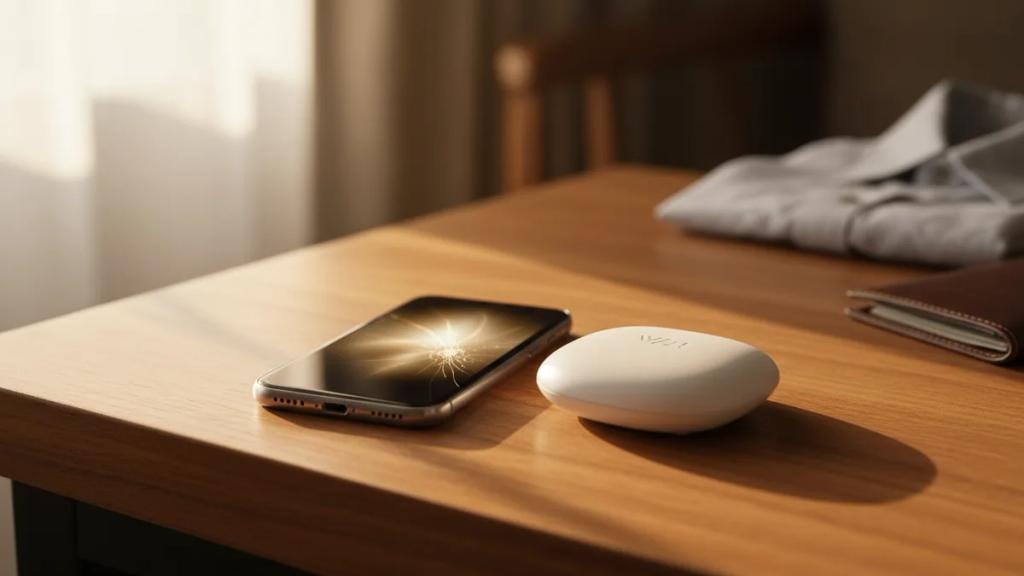
If your phone does not support eSIM, you have not done anything wrong - plenty of perfectly good phones simply lack the hardware, and a rented pocket Wi-Fi gets every one of them online in Portugal without an eSIM at all. eSIM support is a chip and a software feature that older, cheaper, and some region-specific phones were never built with. This is a practical reference: which phones actually miss it, how to check yours in under a minute, and what to do about it if you are heading to Lisbon, Porto or the Algarve.
Which phones don't support eSIM
Let us be accurate rather than scary. Most flagship phones from the last several years do support eSIM. But a large slice of the phones travelers actually carry - especially backups, hand-me-downs and budget models - do not.
- iPhones before the XR / XS. eSIM arrived on Apple with the iPhone XR, XS and XS Max in late 2018. Anything older has no eSIM: the iPhone X, 8, 7, 6s, 6 and the original SE (2016). The second-gen SE (2020) and later do support it.
- Many budget and mid-range Androids. eSIM is common on premium Samsung Galaxy S and Z, Google Pixel and high-end models, but plenty of entry-level and mid-range Androids skip it to save cost. Do not assume a newer-looking cheap phone has it - check.
- Region-specific variants. Some phones sold in mainland China ship without eSIM, and certain dual-physical-SIM variants of otherwise eSIM-capable models drop the eSIM to fit two physical SIM trays. The same model number can differ by the market it was bought in.
- Older and hand-me-down backups. The spare phone in your bag "just in case", the kids' old handset, a device you bought years ago - these are the most likely to have no eSIM at all.
If you are unsure whether your specific model qualifies, our eSIM devices and compatibility guide lists the supported ranges in more detail.
How to check your phone in ten seconds
You do not need to guess. Two quick checks:
- Dial
*#06#on the keypad. If your phone shows an EID number (a long digit string, separate from the IMEI), it has an eSIM. No EID usually means no eSIM. - Check settings. On iPhone, open Settings, then Mobile Data / Cellular, and look for "Add eSIM" or "Add Data Plan". On Android, open Settings, then Network / SIM, and look for "Add eSIM" or a "Download a SIM instead" option. If the option is simply not there, the phone does not support it.
If both checks come up empty, that is your answer, and there is nothing to fix on the phone itself. Our eSIM setup guide walks through activation for phones that do support it.
Why this trips people up on holiday
The awkward moment usually happens on arrival: you land at Faro or Lisbon, try to buy a travel eSIM, and only then discover the phone will not take it. A few common traps:
- You brought a backup or older phone on purpose to avoid risking your main handset, and that is exactly the phone least likely to support eSIM.
- The phone is a hand-me-down whose original market you do not know, so its eSIM support is a gamble.
- It is a work phone locked down by an employer, where adding an eSIM profile is blocked even if the hardware supports it.
None of these are your fault, and none of them mean you are stuck offline in Portugal.
The alternative that works with any phone
Here is the neat part. A rented pocket Wi-Fi (a small portable hotspot) does not care whether your phone supports eSIM, because it never touches your phone's SIM slot at all. It creates its own private Wi-Fi network, and anything with Wi-Fi joins it - your no-eSIM iPhone 8, a budget Android, an old backup, a tablet, a laptop, all at once.
That is a genuinely different approach from an eSIM:
- An eSIM installs a mobile plan onto a chip inside one compatible phone. No chip, no eSIM.
- A pocket Wi-Fi is a separate little router with its own Portuguese mobile connection and its own battery. Your devices connect to it exactly like they connect to hotel or cafe Wi-Fi - a feature every phone made in the last fifteen years has.
So the same device that failed the eSIM check gets full, fast internet in Portugal with zero compatibility drama. And because one hotspot serves up to 10 devices, a family or group where several phones lack eSIM all share a single connection.
An eSIM lives inside a single phone. To share it you have to tether, which drains that phone's battery and is throttled or blocked on most "unlimited" plans.
One rented pocket Wi-Fi shares a truly unlimited connection across the whole group - no phone battery burned, no tethering limits.
Honest comparison: when each one wins
We are not going to pretend an eSIM is bad. If you have a single, modern, eSIM-capable, unlocked phone and you only need data on that one device, an eSIM is cheaper and simpler - nothing to carry, nothing to return. Buy the eSIM. We say so plainly in our eSIM vs pocket Wi-Fi vs SIM comparison, and at more length in pocket Wi-Fi vs eSIM.
The pocket Wi-Fi is the better call when:
- Your phone has no eSIM support (the whole reason you are reading this).
- You want to connect several devices - phones, laptops, tablets - without tethering and overheating one phone.
- You are traveling as a family or group and buying an eSIM for each person adds up fast, often EUR 20 or more each, versus one shared hotspot.
- You need truly unlimited full-speed data. The "unlimited" travel eSIMs apply a fair-use policy: a daily high-speed allowance, then speeds drop to a fraction of full speed. The Portugal Internet hotspot is genuinely unlimited full-speed with no daily cap - see unlimited internet in Portugal.
Getting one without the hassle
Because Portugal Internet is a local provider, you skip the arrival scramble entirely. Order before you fly, and have the pocket Wi-Fi delivered to your Lisbon or Porto hotel, your apartment, a pickup point, or the airport terminal at Faro, Lisbon or Porto. Switch it on - it is already configured - connect every phone in the group, and post it back at the end of your stay. No SIM tray, no EID, no compatibility check required.
For the same problem specifically at the airport, see our guide on what to do when your phone doesn't support eSIM at Lisbon airport. And if your phone is carrier-locked rather than eSIM-less, carrier-locked phones and cheap internet in Portugal covers that case.
Land in Lisbon or Porto with your hotspot already waiting
We deliver an unlimited pocket Wi-Fi to your hotel or airport terminal. No setup - turn it on and connect up to 10 devices.
Frequently asked questions
How do I know for certain if my phone supports eSIM?
Dial *#06# and look for an EID number, or open your phone's mobile data settings and look for an "Add eSIM" option. If there is no EID and no add-eSIM option, your phone does not support it. Older iPhones (X, 8, 7 and earlier) and many budget Androids fall into this group.
My iPhone is a few years old - does it have eSIM?
The iPhone XR, XS and XS Max (2018) and everything newer support eSIM, as does the second-generation SE (2020) and later. The iPhone X, 8, 7, 6s and the original 2016 SE do not. When in doubt, run the *#06# check.
Can I still get online in Portugal with a phone that has no eSIM?
Yes, easily. A rented pocket Wi-Fi creates its own Wi-Fi network that any phone can join, eSIM or not. It works with older iPhones, budget Androids, tablets and laptops alike, so a missing eSIM is simply not a problem.
Will a pocket Wi-Fi work for a group where several phones lack eSIM?
That is one of its best uses. A single hotspot serves up to 10 devices, so everyone connects to the same Wi-Fi regardless of whether their individual phone supports eSIM. It is usually cheaper than buying a separate eSIM for each traveler too.
Is a physical SIM card another option for a no-eSIM phone?
It can be, if the phone is unlocked and has a physical SIM slot - a local data SIM card works in that case. But it only connects that one phone, and it will not help a locked or Wi-Fi-only device. The pocket Wi-Fi connects everything at once with no slot required.