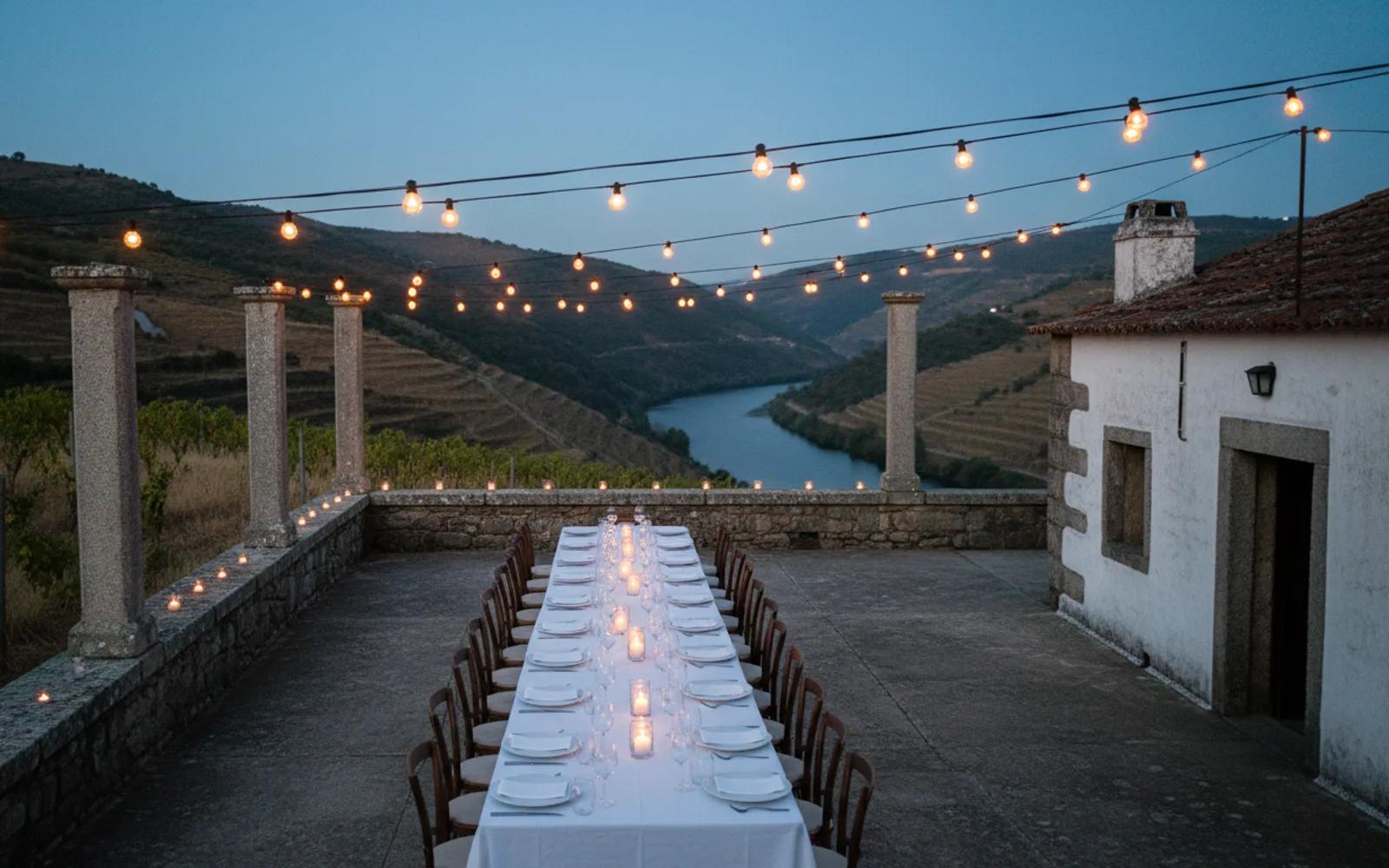
Why the venue WiFi is not the plan
Rural venues typically run one domestic line, often over legacy DSL, with a single router in the main house and thick stone walls between it and everywhere the event actually happens. It was specified for the owners, not for 120 guests, a card terminal in a marquee and a livestream. On the day it does not fail dramatically; it just gets slow at exactly the moment everything needs it at once. Bringing your own connection removes the dependency rather than negotiating with it.
What actually needs to be online at a wedding
Less than people assume, and more critical than they assume. The card terminal for the bar. The coordinator's phone, all day. The photographer backing up cards between the ceremony and dinner. The DJ's streaming playlist, which is the one nobody plans for and everybody notices. A livestream for family who could not travel. None of these need much bandwidth individually; they need bandwidth that is still there at 22:00.
The 22:00 problem: plan the power, not just the signal
This is the detail that decides whether the plan works, and it is the one most people miss. The hotspot runs 6 to 8 hours on its own battery. A wedding day is longer than that. Set it down on a windowsill at 14:00 with a full charge and it dies somewhere around the first dance - which is precisely when the bar is busiest and the card terminal matters most. The fix is trivial and it has to be decided in advance: give it a socket and leave it plugged in, because it charges while in use and simply stays up. Where the good signal spot has no socket, add a power bank or a spare battery for 5 EUR each when you book. Assign the device to a person, give that person the charger, and this failure mode disappears.
Pop-ups, activations and market stalls
Temporary retail has the same shape and a harder deadline: a card reader that cannot take payment is not an inconvenience, it is the whole day's revenue. A hotspot gets a pop-up trading without an installation appointment, a business contract or a landlord conversation, and it moves to the next location with the stand. For a pitch that only exists for a weekend, it is the only proportionate answer.
Backup, not just primary
Plenty of our event customers do have venue WiFi and rent a hotspot anyway, as the thing that keeps the card terminal and the coordinator online when the house line drops. It is cheap insurance against the one failure that cannot be rescheduled. If that is the role, keep the hotspot with whoever is responsible for the day running rather than at the bar.
Coverage: check the venue, not the region
This is the one place we would push back on a booking. Rural quinta coverage is genuinely variable - the Douro valley in particular has real terrain shadows, and a venue two kilometres from a well-covered village can sit in one. Our hotspots run on NOS and Vodafone, which is the widest realistic footprint, but no network covers every square metre. Ask the venue what mobile signal is like in the actual event space, and tell us what they say before you book; if it looks marginal we would rather say so in advance than have you find out on the day.
Getting it there and getting it back
Devices ship anywhere in mainland Portugal, Madeira and the Azores. For events the practical routes are delivery to the venue a day or two early so somebody can confirm it works in the space, delivery to the hotel the party is staying in, or a CTT or Chronopost pickup point near the venue. Rental dates are yours to choose, so a setup day and a strike day can sit either side of the event itself.
Who you are renting from
A fair question when the date cannot move. Portugal Internet has operated from Maia, just outside Porto, since 2015, and has served more than 27,000 travellers, with over 2,000 five-star reviews across Google and Facebook. We run on the native NOS and Vodafone networks rather than reselling roaming, and we run our own delivery and return network across the country, so getting a device to a rural venue is routine rather than an exception. Support is in English, Portuguese, Spanish and French by phone, email and WhatsApp. If your event needs more than one device, or the venue looks marginal, talking to us before you book costs nothing and is genuinely the faster route.